Who we are
Hello, I’m Steve Willis, Founder of Willis Fabrication.
I’ve spent more than 45 years in the equine industry as a farrier, along with decades as a welder, fabricator, and construction professional. Horses, construction, and problem-solving have been constant threads throughout my life.
Over the course of my career, I worked in more than 1,000 equine facilities. What struck me was that barns and stall systems had changed very little over the decades. Most were still built the same way when I was young.
I began asking myself a simple question:
How do you achieve the durability, safety, and longevity of masonry, lower construction costs, and reduce permitting burden that typically comes with it?
That question led to the development of a precast, modular concrete panel system.
The early prototype was designed and built from the ground up — including forms, fabrication, and assembly — drawing from my experience in concrete construction and metal fabrication. There were no blueprints and no outside engineering. With only hands-on experience and a willingness to solve the problem.
This project has been set aside a number of times. Economic downturns, design limitations, manufacturing inefficiencies, and personal hardship forced me to pause development at different points. But each time, I returned to it with improvements.
The project redesigned for scalability. Labor-intensive processes were simplified. Aesthetics were upgraded. The system is now on its third major redesign — each version more refined and production-ready than the last.
The first stall prototype was introduced at Equine Affaire in 2007 and received strong positive feedback from industry professionals and horse owners. The 2008 economic downturn slowed further development, but it did not end the work.
Following the Haiti earthquake, I recognized that with structural modification, the same core panel system could serve emergency shelter applications. The platform’s durability, non-combustible characteristics, and ability to meet strong wind load requirements expanded its potential well beyond equine facilities.
Over time, the system evolved from a single-product concept into a broader structural platform capable of supporting equine housing, utility buildings, agricultural shelters, small shops, emergency shelter, military applications, and eventually small-format residential structures such as ADUs and workforce housing.
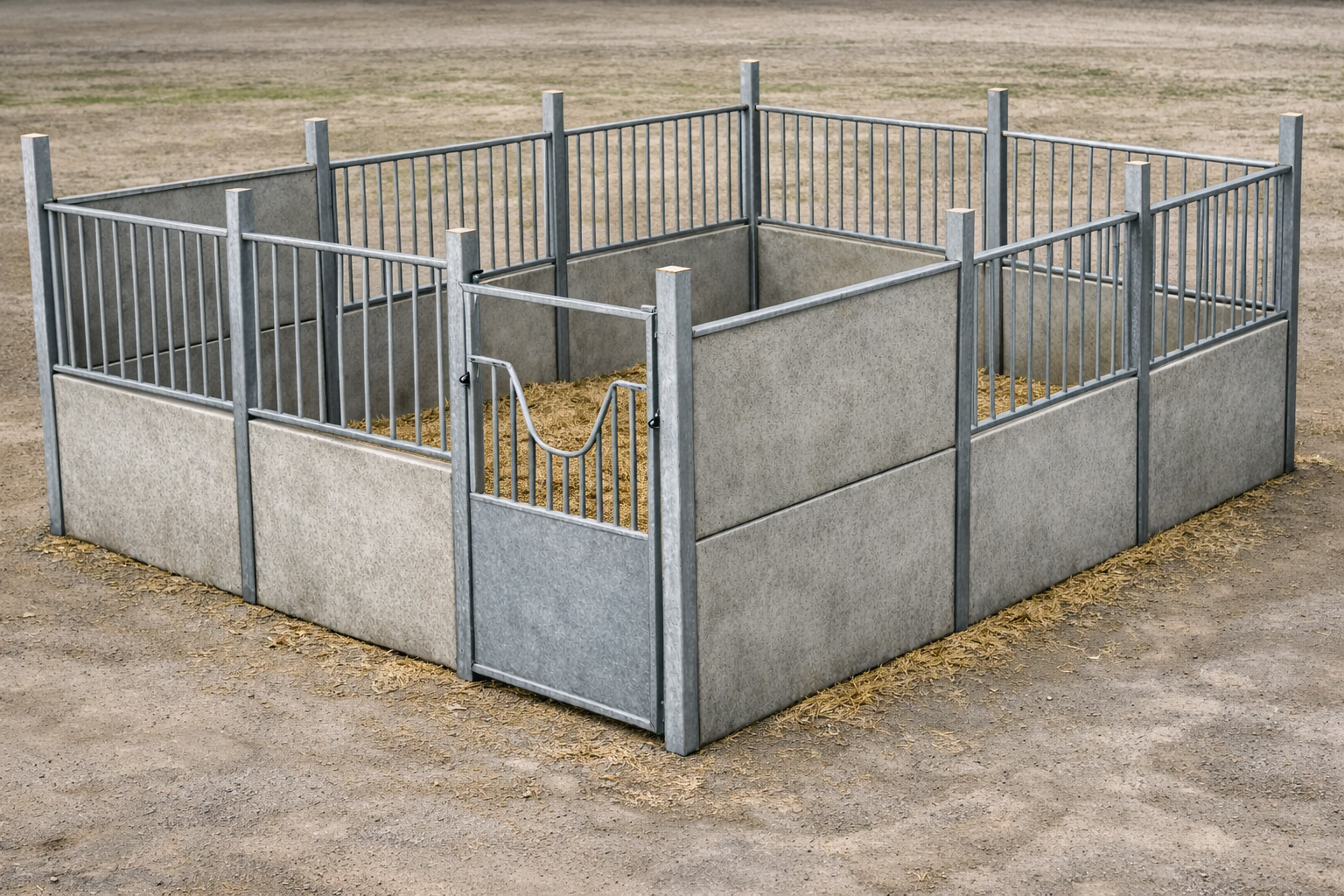
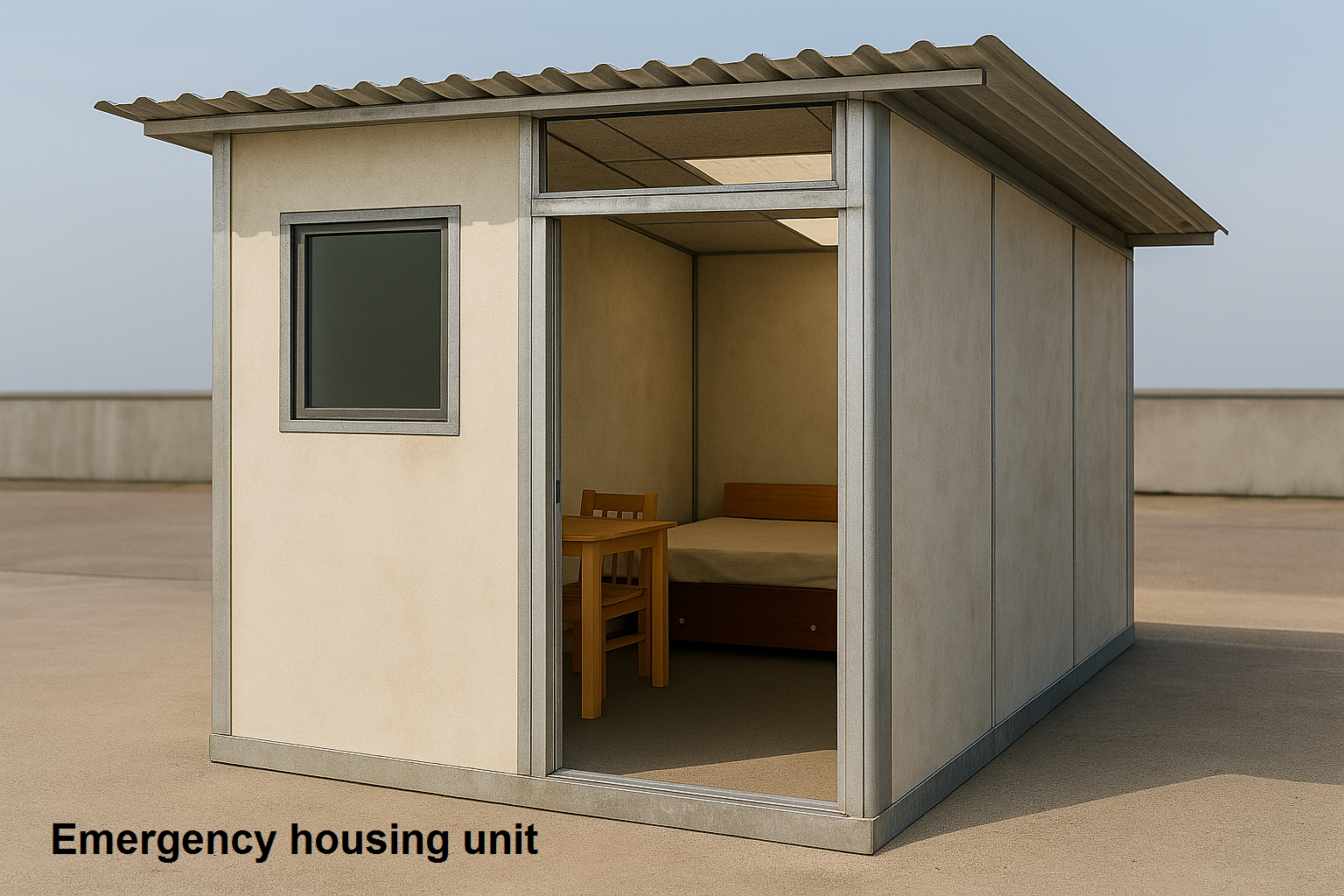
Conceptual applications shown. Proprietary modular system. Patent pending.